
Introduction
The traditional Fijian bure stands as one of the Pacific’s most sophisticated examples of vernacular architecture a dwelling form refined over centuries through patient observation of climate, community need, and material availability. Unlike colonial or contemporary structures that dominate modern Fiji, the bure represents an architectural philosophy where form emerges directly from environment, culture, and collective labor.
In a time when global architecture increasingly grapples with sustainability challenges, passive cooling demands, and climate resilience, the bure offers profound lessons. This traditional house typifies how indigenous communities engineered solutions to problems that modern architects only recently began recognizing as critical: natural ventilation strategies, cyclone-resistant design, sustainable material harvesting, and social equity embedded in the building process itself.
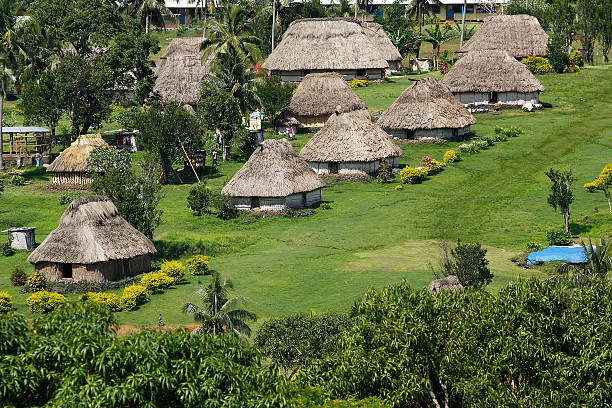
The bure is far more than a sheltering structure. It encodes Fijian cultural identity, spiritual beliefs, social hierarchy, and relationship with the natural environment. In villages like Navala home to approximately 1,000 residents living in roughly 100 traditional bures—this architectural tradition endures, offering visitors and researchers a tangible connection to indigenous Pacific life prior to European contact.
This comprehensive guide explores the bure’s architectural intelligence, construction methodology, cultural significance, and contemporary revival efforts, providing architects, heritage conservationists, designers, and cultural enthusiasts with detailed understanding of Fiji’s most iconic dwelling form.
What Is a Bure?
Definition and Cultural Significance
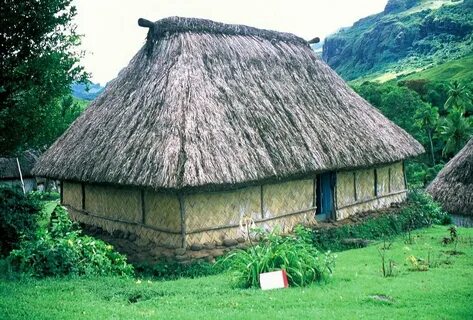

The word bure (pronounced “boo-ray”) refers to the traditional open-sided or semi-enclosed dwelling house that has served as the primary residential structure throughout Fiji for centuries. Structurally, a bure is characterized by: a raised foundation platform (yavu), a framework of wooden posts supporting a dramatically sloped roof, woven wall panels of split bamboo or reeds, and a roof covered in thatch composed of soga palm leaves or pandanus fronds.
Beyond structural definition, the bure functions as the physical manifestation of Fijian cultural identity. In old Fiji, the bure represented more than just a dwelling place of humans and of gods. It represented more than just the epitome of Fijian artisanship and cultural intellectual property. The bure embodies the architectural expression of vanua (land and people as inseparable unity), the Fijian concept that bonds people to their territory, ancestors, and spiritual inheritance.
Traditional Fijian villages still differentiate dwelling types based on occupant status and function, creating an architectural hierarchy that spatially expresses social organization:
The Typology of Traditional Fijian Dwellings
Burenisa (Family Dwelling)
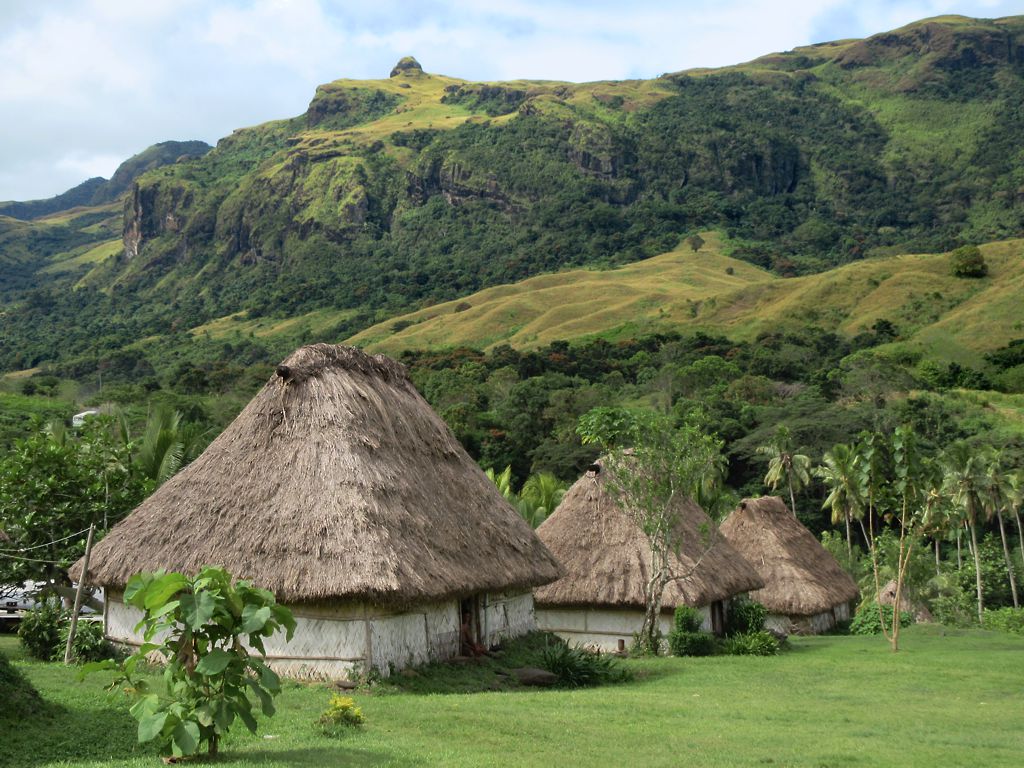
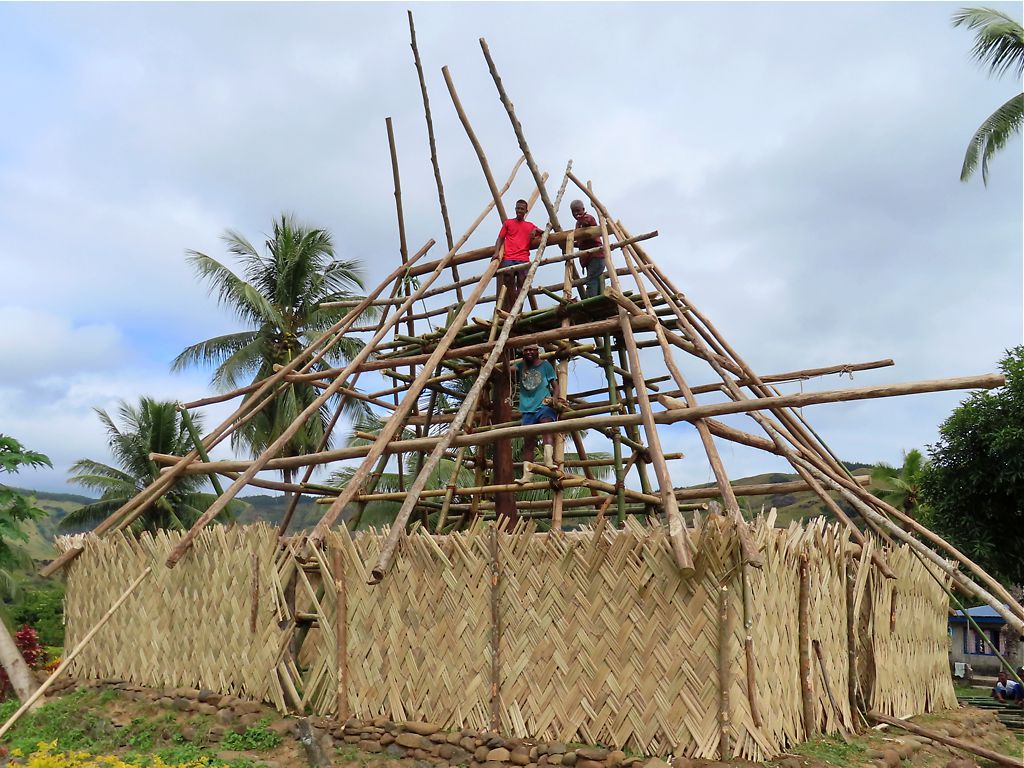
The most common bure form, measuring typically 10-15 meters long and 6-9 meters wide. These rectangular structures house extended families or nuclear family groups. The burenisa features a central timber pole structure, stone or earth plinths (yavu), interior walls woven from split bamboo (volivoli), earth-pounded floors covered with coconut-leaf mats (lolohau), and high-pitched roofs covered in soga palm thatch. Interior arrangements include sleeping platforms raised 1-1.5 meters above ground level, storage areas, and a central hearth (in older examples) or separate kitchen bures.
Vale Levu (Chief’s House)

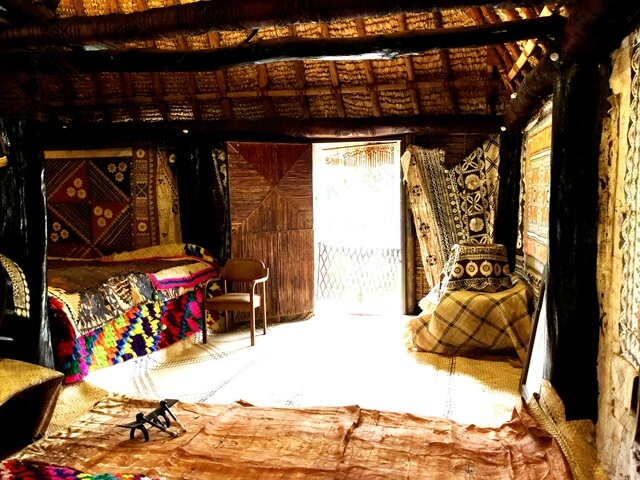

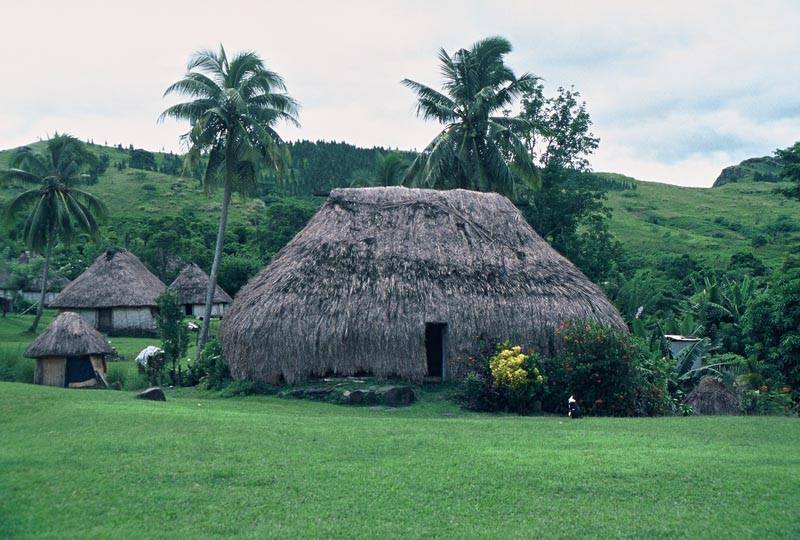
Substantially larger than family dwellings, the chief’s Vale Levu represents architectural expression of chiefly authority and social prominence. These structures demonstrate refined carpentry, more elaborate roof construction, and higher-quality materials. The Vale Levu positions the chief’s sleeping and receiving platforms at the building’s uppermost end (higher elevation = higher status), with receiving areas for formal meetings and ceremonies dominating the interior spatial organization. Fine carved wooden posts, more sophisticated joinery, and elaborate roof finials distinguish the Vale Levu from family structures.
Bure Kalou (Spirit House)
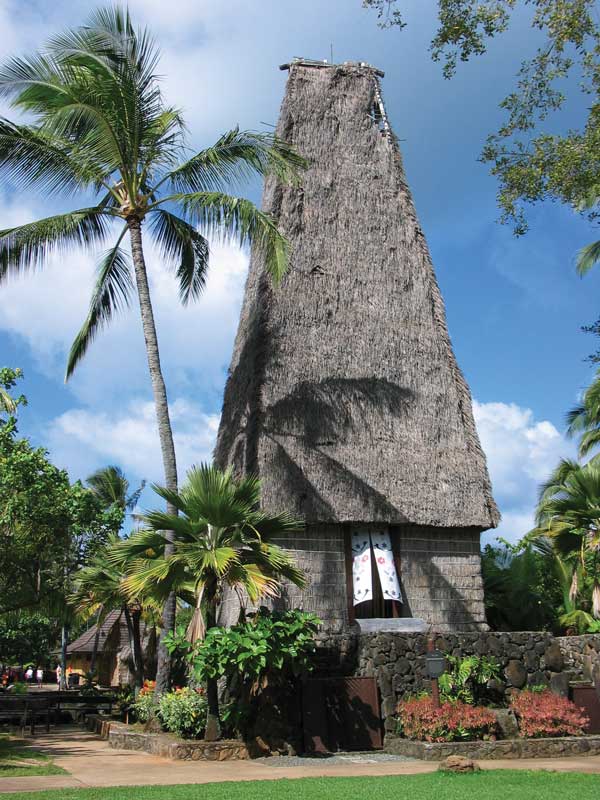

Sacred structures smaller than residential bures, housing spiritual presence and religious paraphernalia. The bure kalou occupies a spiritually significant position within village planning, typically located at a higher elevation or ritually demarcated space. These structures represent the connection between physical and spiritual realms, embodying beliefs that ancestral and divine presences inhabit the built environment.
Defined by its vertical axis. The architecture was designed to bridge the gap between the sky (gods) and the earth (people).
Traditional Materials
The construction of a traditional bure requires intimate knowledge of forest resources, seasonal harvesting cycles, and material preparation techniques developed over thousands of years of Pacific settlement. Every element comes from renewable natural sources available within the island ecosystem.
| Component | Primary Material | Fijian Name | Source Location | Key Properties | Typical Lifespan |
| Structural Posts | Vesi hardwood | Vesi | Inland forests | Extremely dense (1,000+ kg/m³), natural termite resistance, exceptional durability | 50+ years |
| Structural Posts (alt) | Dakua kauri | Dakua makadre | Mountain forests | Large diameter, straight grain, moderate density, good workability | 30-40 years |
| Ridge Beam | Yaka softwood | Yaka | Hill forests | Large sections available, adequate strength, decay resistant | 25-35 years |
| Rafters | Coconut palm trunk | Niu | Plantation/coastal | Fiber-reinforced structure, flexible, abundant | 15-20 years |
| Purlins | Bamboo | Bitu | Forest margins | Lightweight, strong in tension, fast-growing renewable | 10-15 years |
| Roof Thatch (primary) | Sugar cane leaves | Boi | Agricultural land | Readily available, good water resistance, moderate durability | 10-15 years |
| Roof Thatch (traditional) | Vau bark fiber | Vau | Forest trees | Exceptional water resistance, premium material, labor-intensive | 20-25 years |
| Roof Thatch (coconut) | Coconut fronds | Niu drau | Plantation/coastal | Most accessible, shortest lifespan, used for temporary buildings | 5-7 years |
| Ridge Capping | Woven pandanus | Drala | Coastal swamps | Flexible, water-resistant, decorative | 5-8 years |
| Lashing Rope | Coconut fiber rope | Magimagi | Coconut husk processing | Strong, flexible when wet, allows structural movement | 15-20 years |
| Wall Panels | Woven bamboo | Bitu sasaga | Forest bamboo | Lightweight, allows airflow, easy to replace | 8-12 years |
| Wall Panels (alt) | Woven coconut leaves | Niu drau sasaga | Plantation | Quick to produce, adequate for residential buildings | 3-5 years |
| Floor Covering | Woven mats | Ibe | Cultivated pandanus | Comfortable, decorative, defines internal space | 2-5 years (replaced regularly) |
| Floor Base | Bamboo slats | Bitu | Forest | Creates raised floor surface, allows airflow | 10-15 years |
The bure represents Fiji's traditional architectural wisdom built by communities using ancestral knowledge and natural materials. These climate-adapted structures demonstrate sustainable building principles that modern architecture is rediscovering, proving that comfort and resilience can be achieved through simple, renewable construction methods.
at the end I hop you like the post please check other post below