
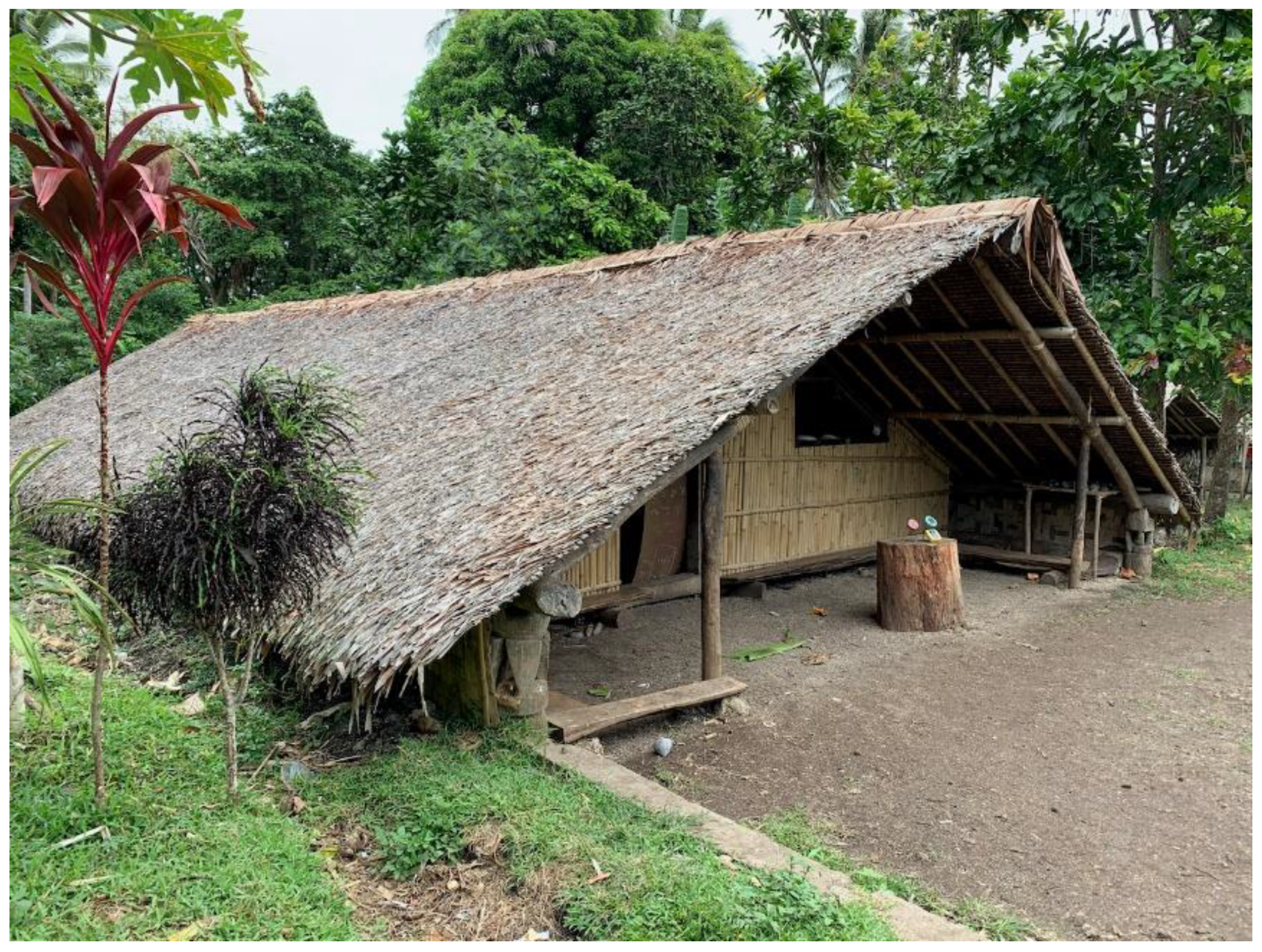
Explore Vanuatu's nakamal traditional meeting houses showcasing indigenous architecture, cyclone-resistant design, and sustainable natural materials.
Introduction
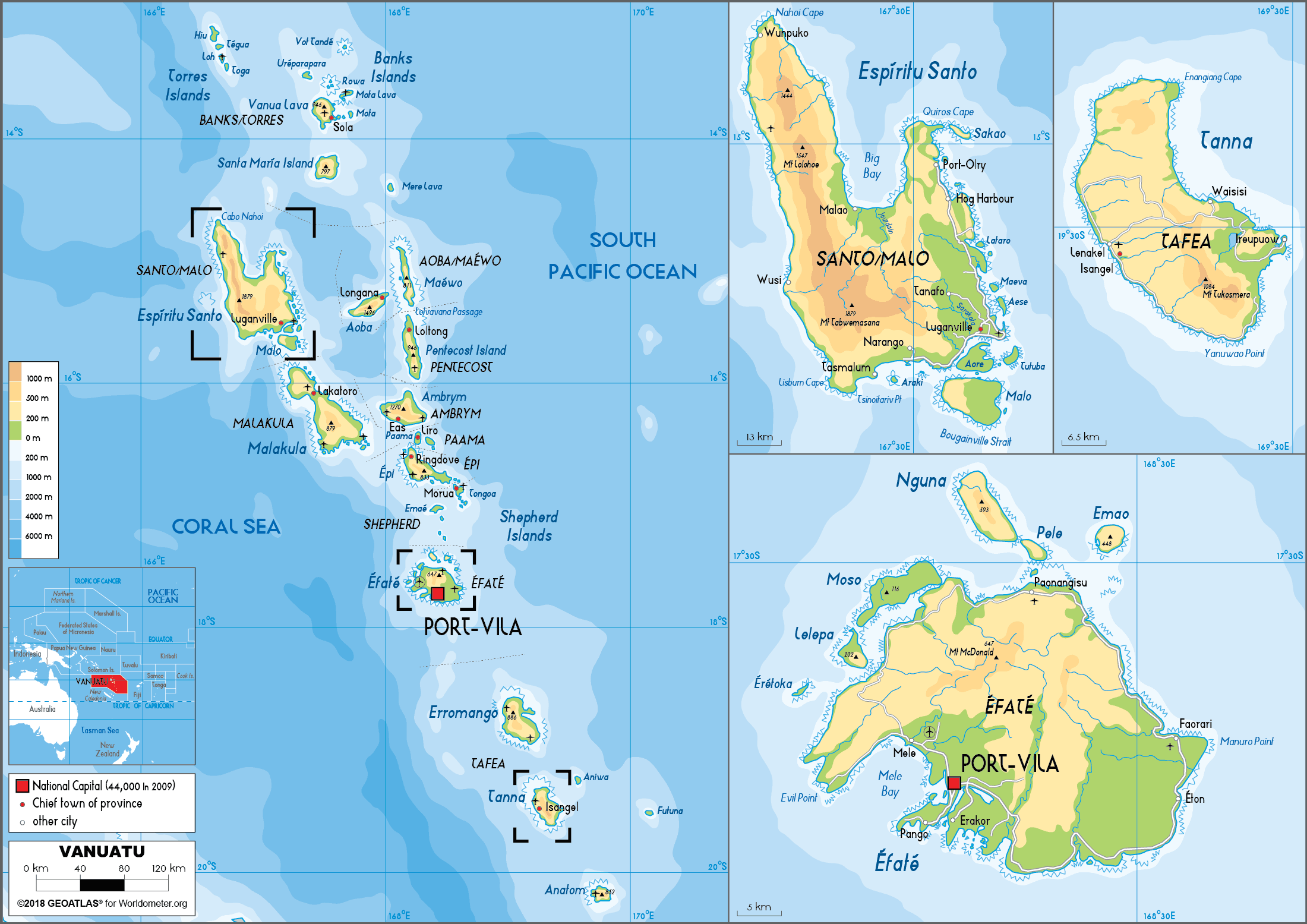
Vanuatu, an archipelago of over 80 islands in the South Pacific Ocean, is home to one of the most distinctive forms of indigenous architecture in Melanesia—the nakamal. These traditional meeting houses represent far more than simple shelters; they serve as living examples of ancestral construction methods, embodying centuries of knowledge in climate-responsive design and community-centered building.
In an era where modern industrial materials increasingly dominate Pacific landscapes, the nakamal offers essential insights into resilient design, environmental sustainability, and cultural heritage preservation. This comprehensive guide examines the structural engineering, natural building materials, and deep cultural significance of these remarkable structures.
What is a Nakamal ?
A nakamal (also spelled nakamal or nakamál) is a traditional meeting house found throughout Vanuatu. The word itself carries deep meaning—in some regions it translates to “house of men,” though its function extends far beyond a simple gathering place.
Primary Functions of the Nakamal
| Function | Description |
| Governance | Chiefs conduct village meetings and resolve disputes |
| Kastom Ceremonies | Traditional rituals and cultural practices are performed |
| Kava Drinking | Central space for communal preparation and consumption of kava |
| Knowledge Transfer | Elders teach younger generations traditions, history, and skills |
| Disaster Shelter | Community refuge during cyclones and severe weather |
| Social Gathering | Unmarried men may sleep in the nakamal; visitors are hosted |

Regional Variations
Nakamal design varies significantly across Vanuatu’s islands:
1- Malekula & Ambrym
Large enclosed structures with elaborate carved posts
2 – Tanna
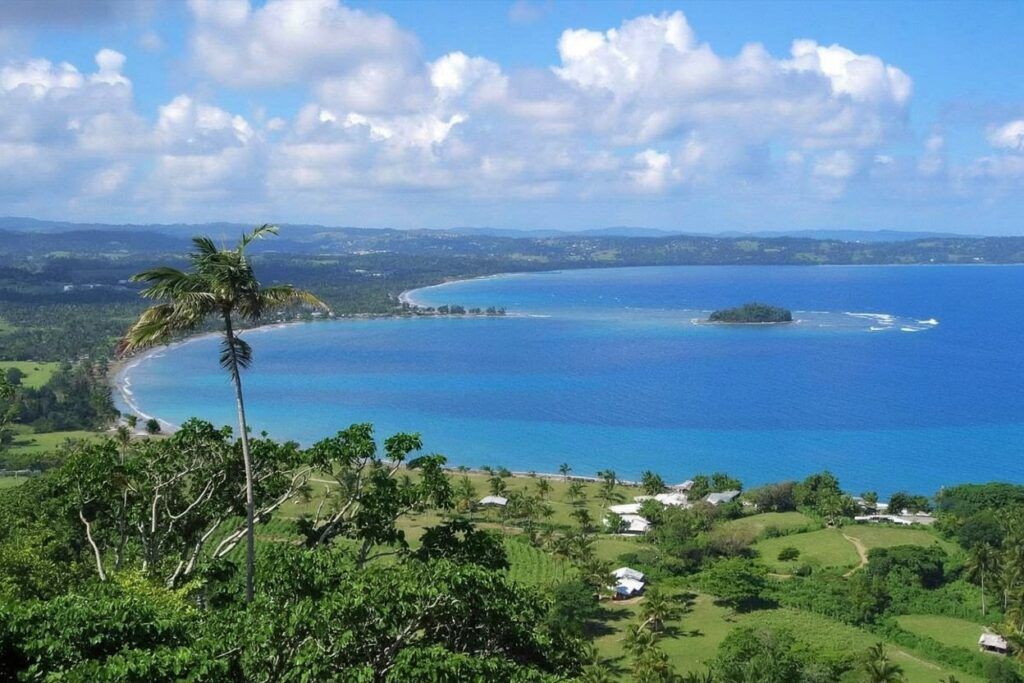
Amazing things in Tanna, Volcanoes, thundering jungle waterfalls, Vanuatu’s famous Blue Cave … the island of Tanna in Vanuatu is like nature writ large. you can read more in vacation travel

3 – Efate (Port Vila)
The monumental Chief’s Nakamal serves as national headquarters


- Banks Islands
Simpler open-air structures often located under banyan trees
Architectural Forms & Typology
Traditional nakamal architecture in Vanuatu can be categorized into three primary typological forms, each adapted to specific cultural needs and environmental conditions.
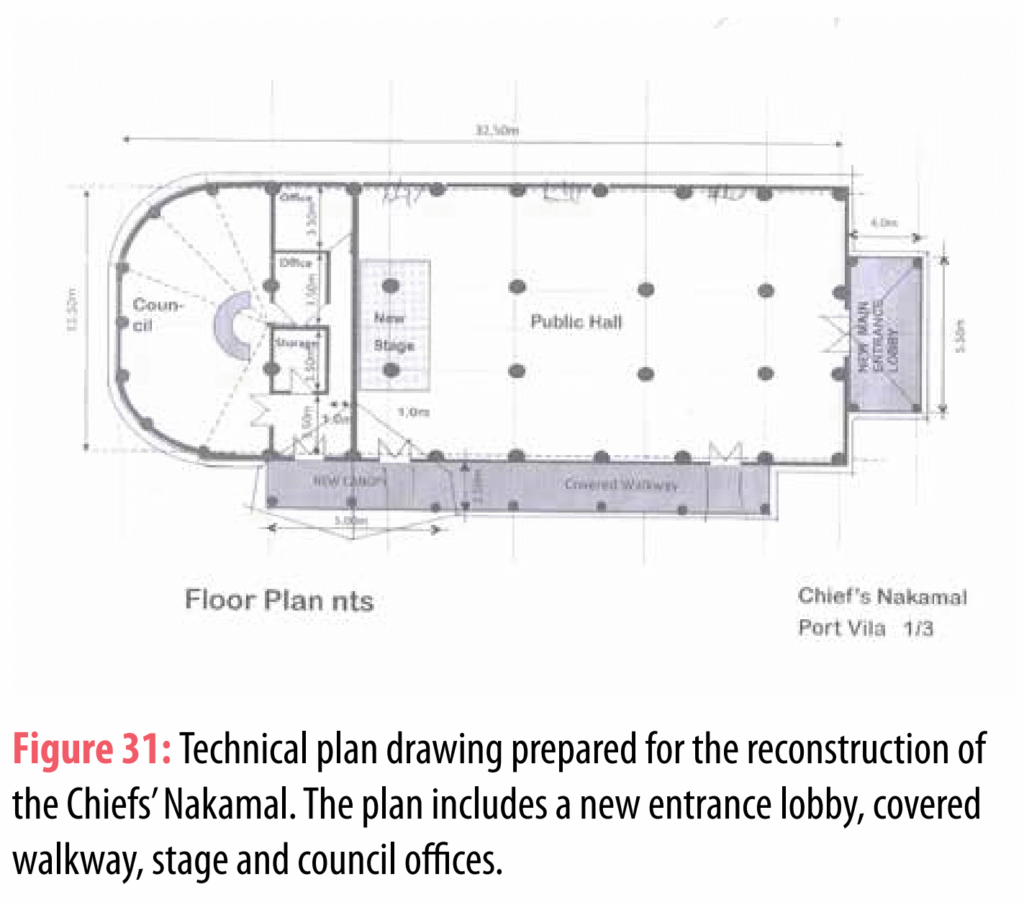
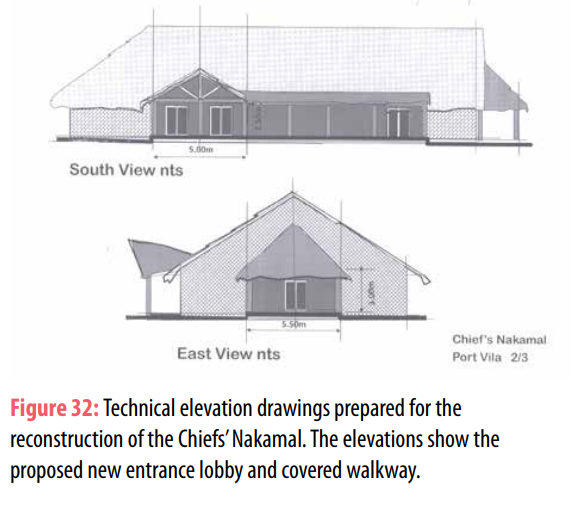
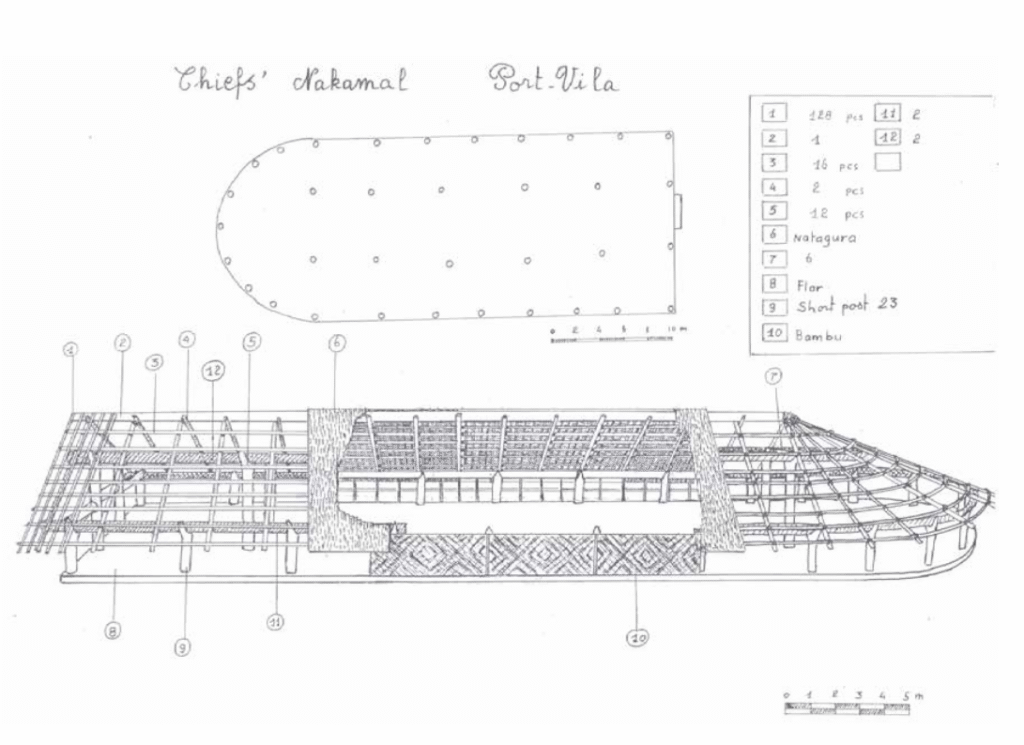
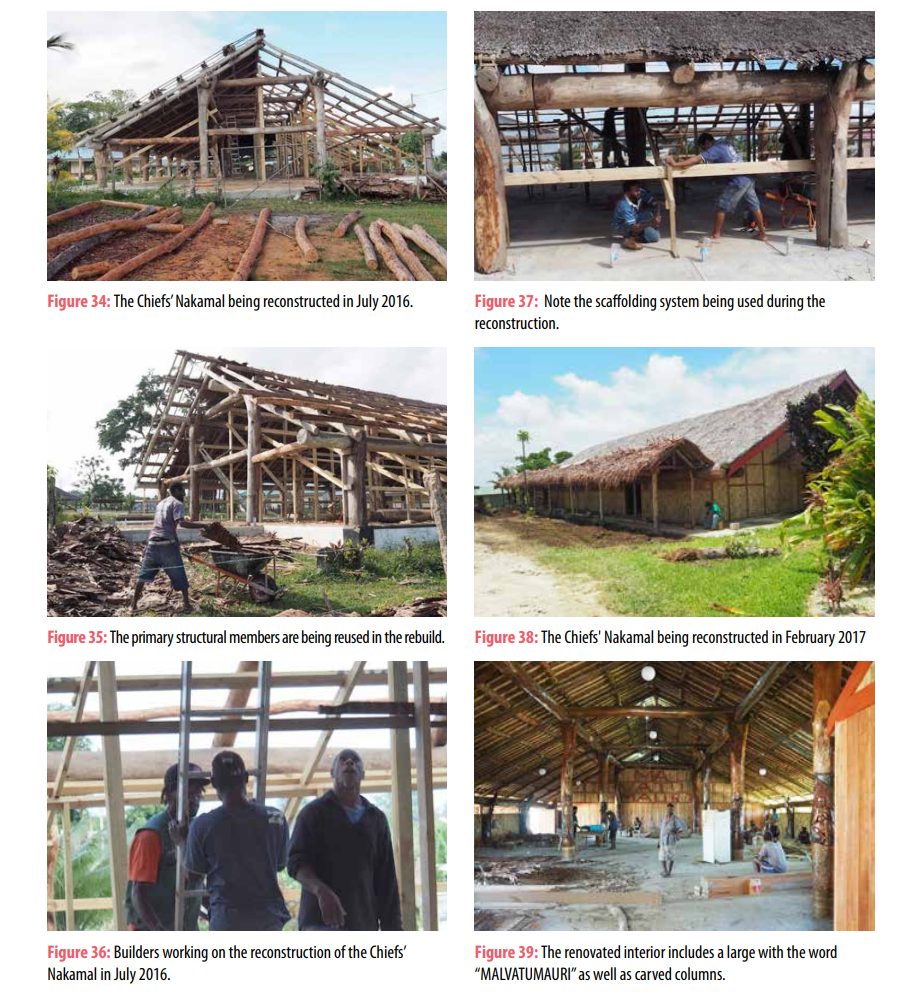
1. Rectangular Form (Chiefs’ Nakamal)
The rectangular nakamal is the most monumental form, typically used for important community and chiefly functions.
Characteristics:
- Large rectangular floor plan (can exceed 20m × 10m)
- Multiple structural bays defined by post-and-beam framework
- High central ridge with steep roof pitch
- Formal entrance orientation
- Often includes covered walkways and auxiliary spaces
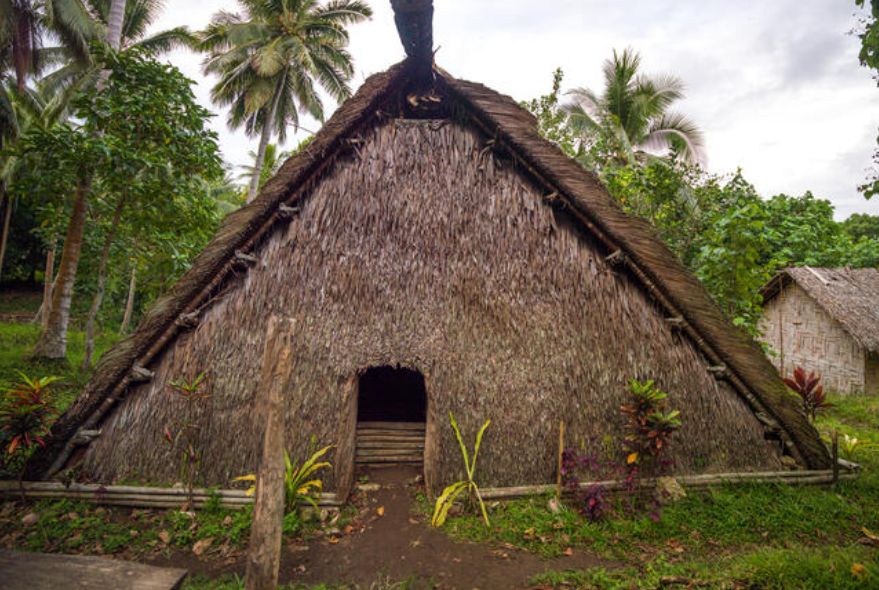
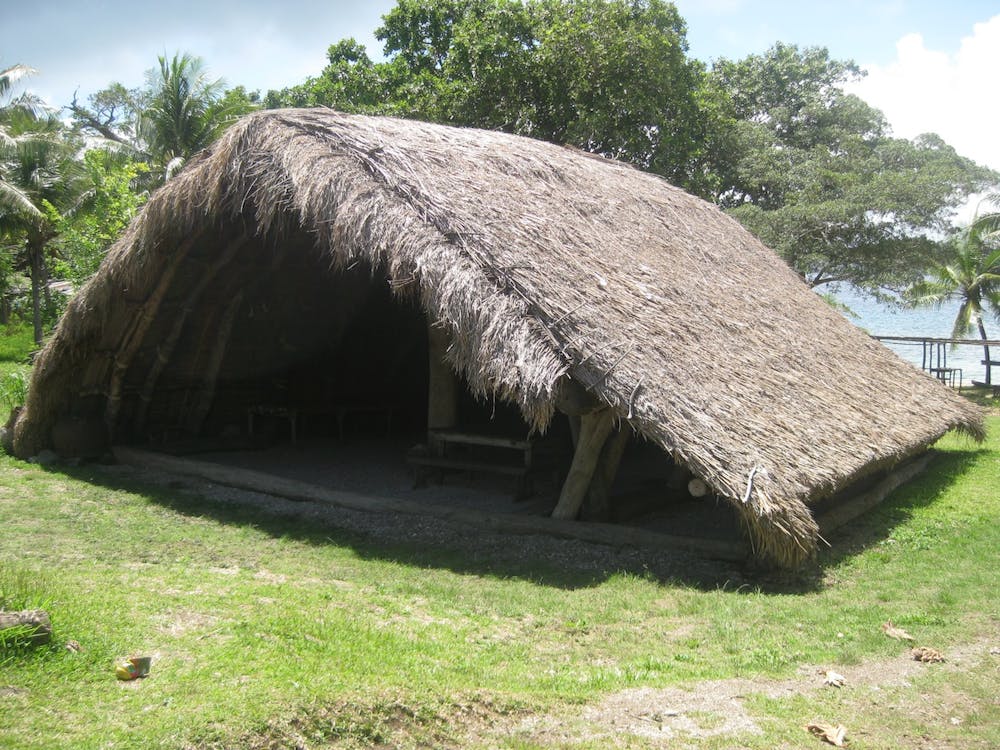
2. A-Frame Form (Cyclone House / Farea)
The A-frame nakamal represents perhaps the most ingenious structural solution in Pacific architecture—a building designed specifically to withstand Category 5 cyclones.
Characteristics:
- Triangular cross-section with steep 60-75° roof pitch
- Rafters extend from ridge beam directly to ground (no vertical walls)
- Roof structure IS the wall structure
- Extremely low profile reducing wind load
- sometime the Rafters buried up to 1 meter into the ground
3. The Yakel Tree House
The tree houses in villages like Yakel on Tanna Island are a core part of the local kastom (traditional culture), serving both practical and ceremonial purposes
- Characteristics:
- bamboo for the walls, wild cane for structural elements, and layered palm or wild cane leaves for the thatched roof.
- Built high up over giant banyan trees or on stilts to protect from flooding, wild animal, and to enhance natural ventilation
- Components are secured using flexible forest vines , which absorb the strong winds and cyclones without breaking apart.

Traditional Materials
| Component | Material | Local Name (Bislama)1 | Source | Key Properties |
|---|---|---|---|---|
| Structural Posts | Hardwood timber | Natora, Burao | Forest | Durability, termite resistance, strength |
| Rafters | Coconut palm trunk | Kokonas | Plantation | Flexibility, availability |
| Purlins | Bamboo | Bambu | Forest/cultivated | Lightweight, strong, fast-growing |
| Roof Thatch (primary) | Sago/Natangura palm | Natangura | Forest | Water resistance, durability (15-20 years) |
| Roof Thatch (alternate) | Wild cane grass | Waelken | Grasslands | Flexibility, insulation, availability |
| Roof Thatch (coconut) | Coconut palm fronds | Lif kokonas | Plantation | Readily available, moderate durability |
| Ridge Seal | Wild ginger leaves | Wael ginga | Forest | Waterproofing the ridge line |
| Wall Panels | Split bamboo | Bambu | Forest | Lightweight, woven for flexibility |
| Lashings | Forest vines/lianas | Rop blong bus | Forest | Flexibility, strength, cyclone resistance |
| Floor | Coral gravel / Earth | Korel, Graon | Beach/local | Drainage, stability |
- national language of the Republic of Vanuatu ↩︎
The nakamal is a traditional architecture style in Vanuatu, designed and built by local communities using knowledge passed down through generations. These structures use natural materials and are well adapted to the climate, showing building principles that modern architecture is starting to value again.
at the end I hop you like the post please check other post below